
Category: Article
-
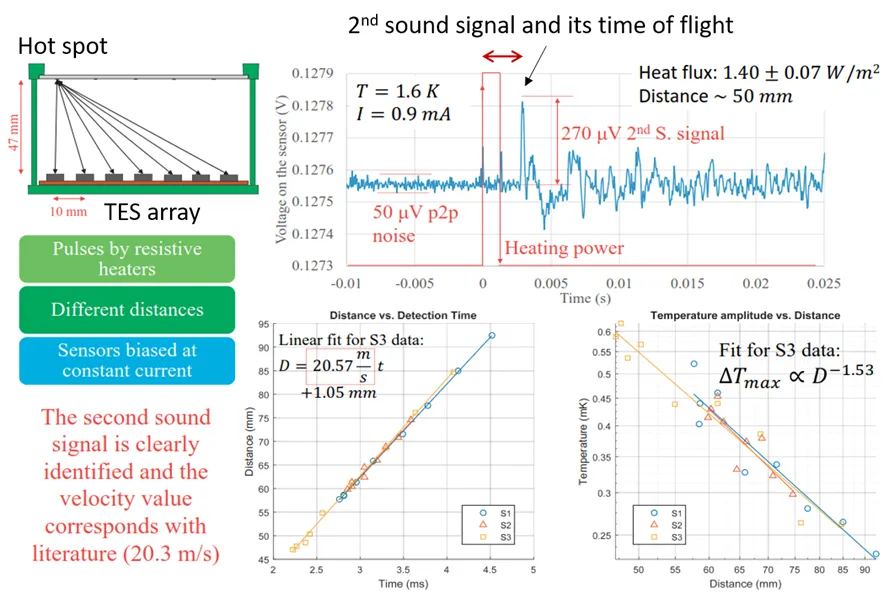
Localization of Quench hot spots at SRF cavity surfaces and thin film to substrate interaction
Cooling future SRF cavities by superfluid helium (typically He II at T~1.8 K), has the potential to increase accelerating gradients and enable He II second sound cavity diagnostics. A new type of Transition Edge Sensors (TES) for quench spot localisation has been developed to improve the spatial resolution of the 2nd sound trilateration method due
-
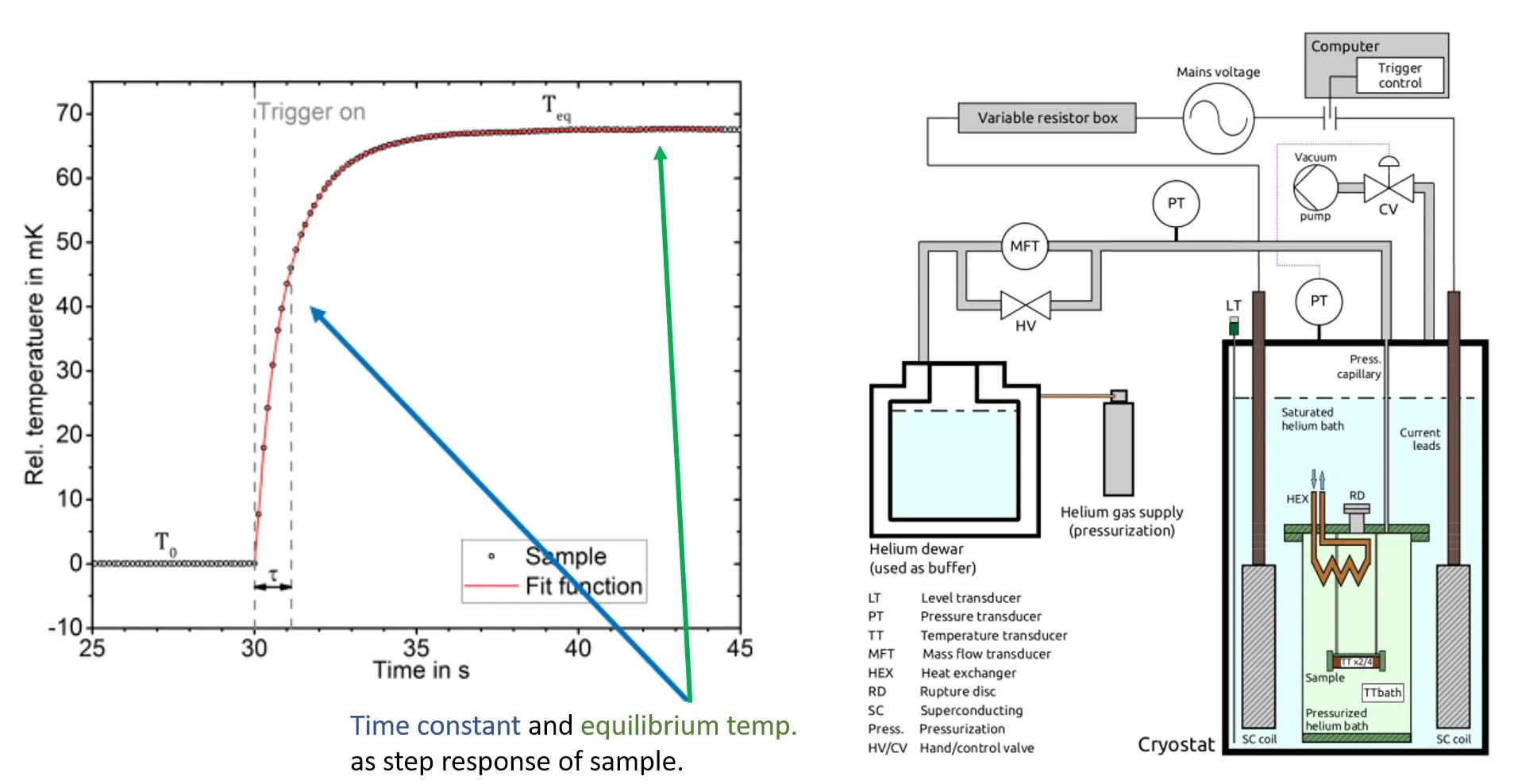
Heat transport studies in superconducting NbTi and impregnated Nb3Sn coil samples
He II heat transport phaenomena in confined geometries of Rutherford-type magnet coil geometries are an essential input for the simulation tools of the heat load management of existing LHC type coil structures as well as for the future HL-LHC fully impregnated Nb3Sn magnets. The test stand determines the transient cooling performance of Polyimide insulated NbTi
-
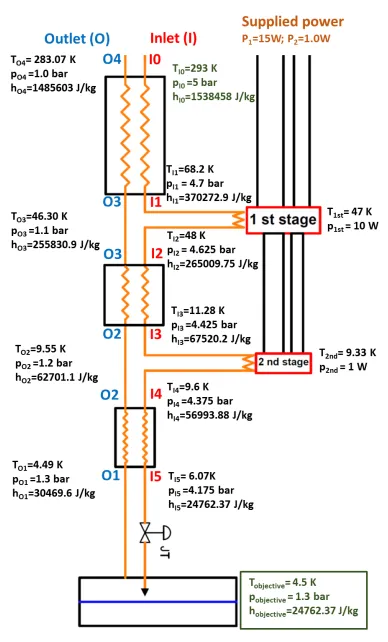
Cryocooler based remote cooling circuits
The development of cryocooler based cooling options for detectors enable remote operation of highly sensitive sensors detecting magnetic signals of e.g. particle beams. On one hand cryocoolers are sensitive to high magnetic fields (electrical motors in the valve unit, magnetic phase change materials in the regenerator part of the cold head), while on the other
-
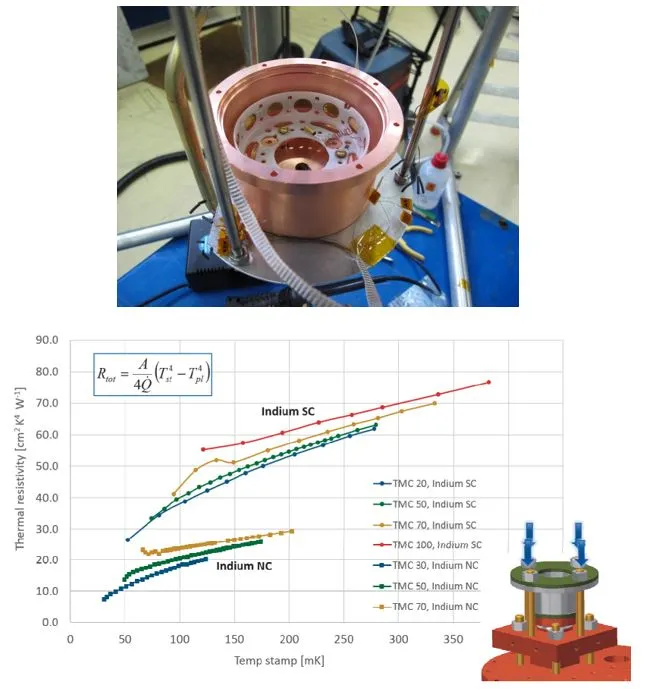
Heat transfer studies at dielectric metal interfaces at ultra-low temperatures
The Cryolab dilution refrigerator enables research at ultra-low temperatures T<300 mK and the focus is on studying the heat transfer mechanisms at metal dielectric interfaces, which is dominated by the Kapitza thermal resistivity. The dilution refrigerator reaches a minimum temperature of T<20 mK (lowest recorded single shot temperature 9.85 ± 0.27 mK), with a capacity
-
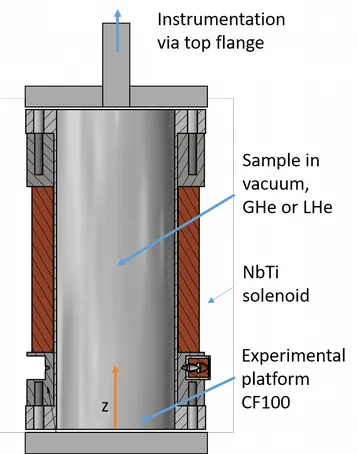
Solenoidal magnetic field background cryostat
For up to 5 T, sample in vacuum or LHe conditions. The cryostat insert features a NbTi SC solenoid coil that can reach a magnetic flux density of up to 5 T with 100 A current supplied. The sample chamber is formed from a CF 100 flange tube assembly that providing an active length of
-
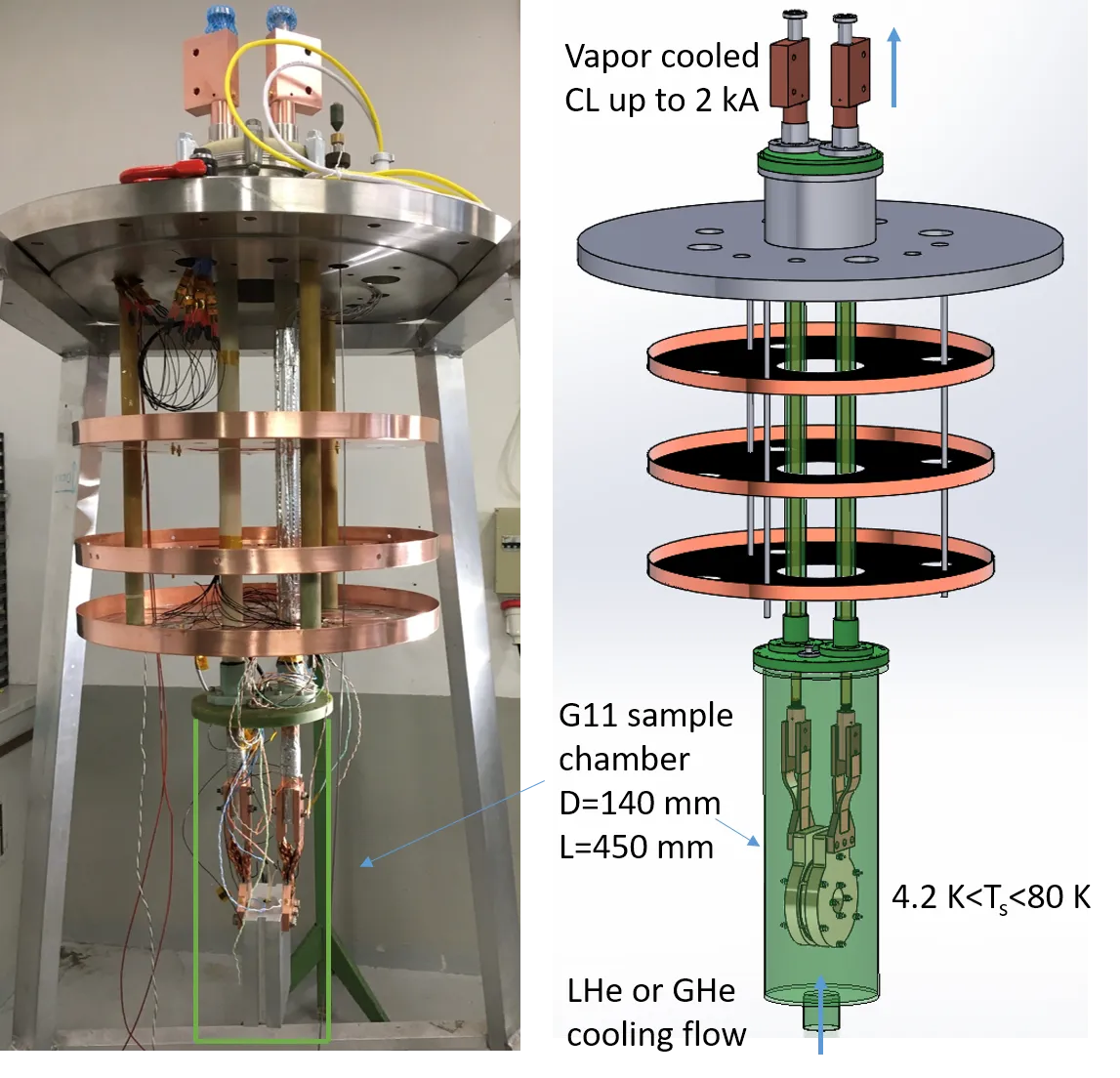
Variable temperature cryostat insert
LHe or GHe cooled 2 kA vapor cooled current leads and local non-magnetic non el. conducting sample environment at 4.2 K < T < 80 K. The insert enables the thermalisation of the sample environment between 4.2 K and 80 K while being electrically insulated. The maximum current supplied to the sample is 2 kA
-
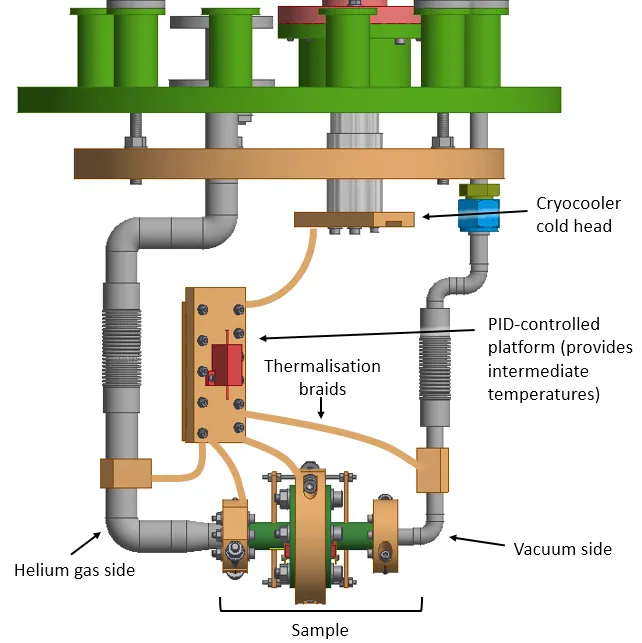
Gas permeability through membranes
This test stand measures the helium permeability of membranes such as Mylar, aluminised Mylar, Kapton, etc. by means of a mass spectrometer connected to the vacuum side of the sample. The test stand consists of a cryocooler that cools a PID-controlled intermediate temperature stage that in turns cools the sample membrane and its surrounding gas.
-
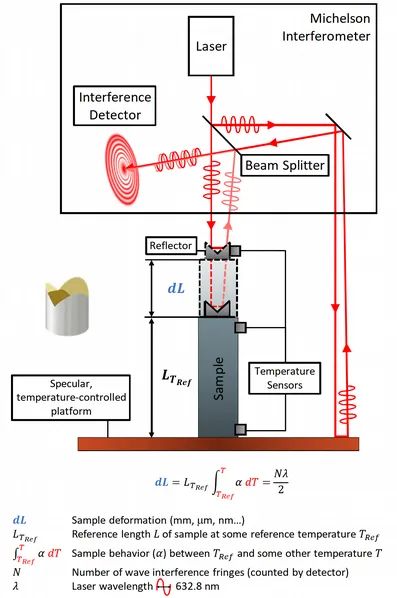
Thermal dilatation measurement stand
The TDMS is equipped with a commercial Laser Interferometer using two aligned laser beams (distance 21 mm) to determine the differential change in distance between a reference surface and the sample surface. One retroreflector placed at the sample is enhancing the surface light reflection in case the sample is not sufficiently reflecting a wavelength of
-
Thermal conductivity test stand
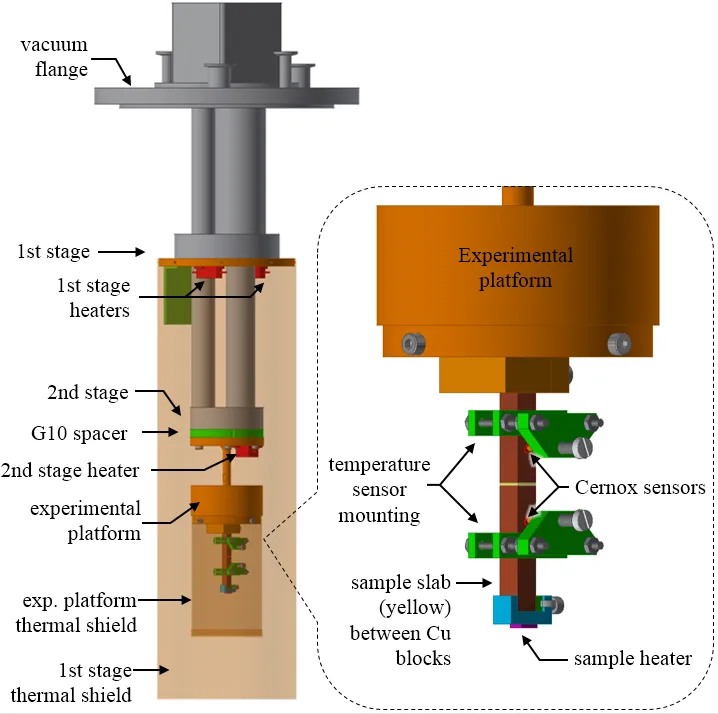
This multipurpose cryocooler-based measurement test stand is able to provide a measurement platform in a wide temperature range from 2.7 K to 200 K, with an additional point at room temperature. Thermal conductivity measurements can be carried out in either steady state, quasi steady state or transient conditions; thermal diffusivity measurements are also possible. The
-
Superconducting cable splice resistance
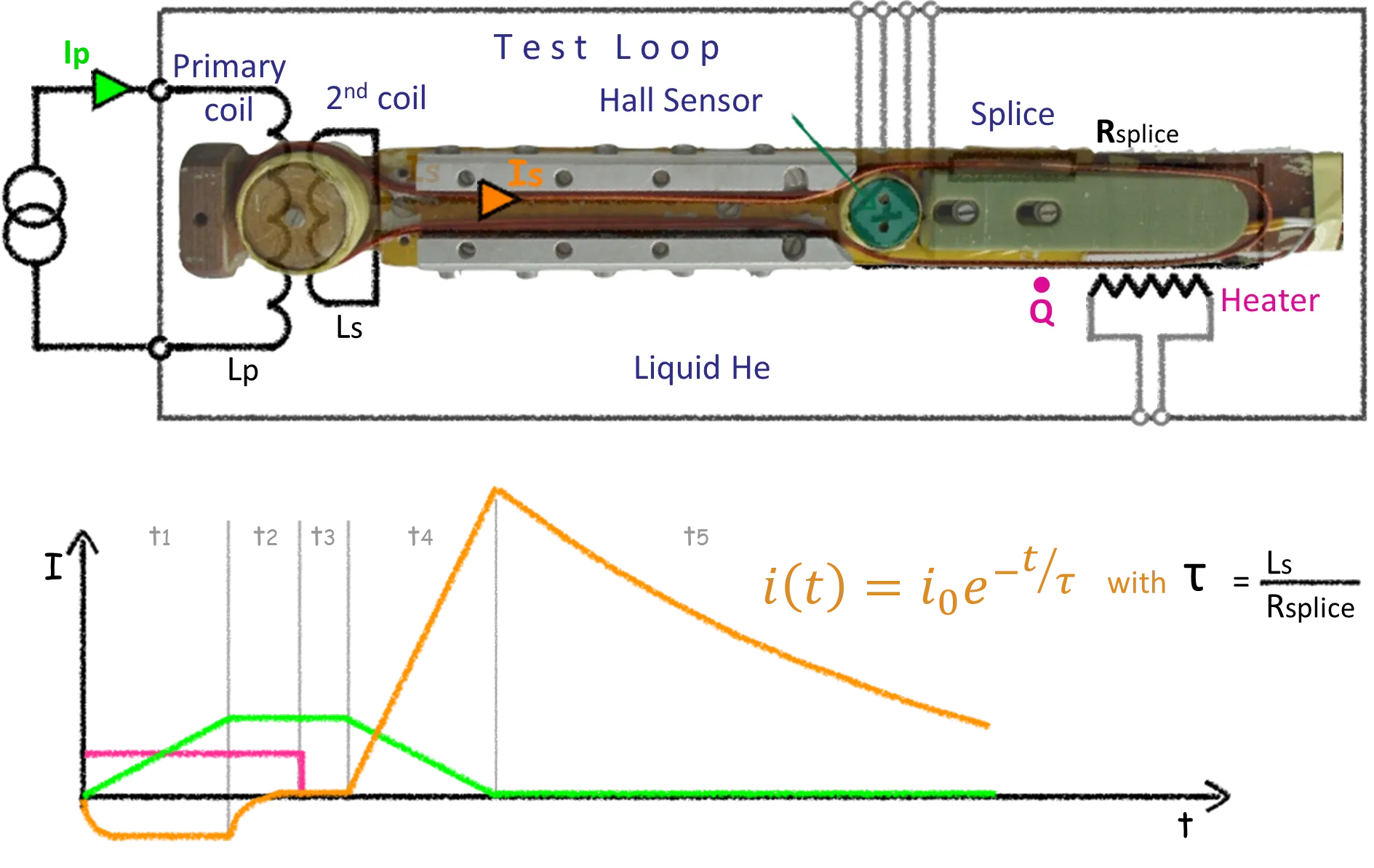
A test stand for superconducting cable splices produced by different techniques for quality control of the techniques used in LHC splices. The resistance of the splice should be as low as possible, typically between 0.6 nΩ and 6 nΩ depending on the sample. Samples are measured at 4.2 K (liquid helium) by heating the sample